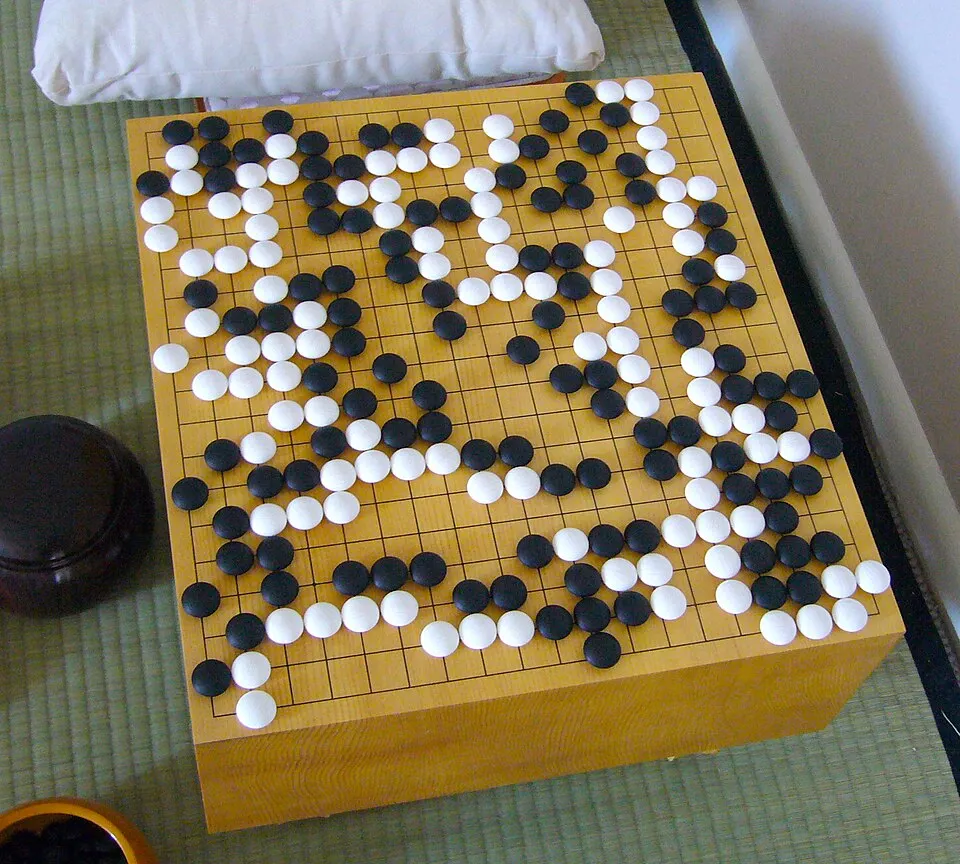

A stone has an address
On a wooden board you reach for an intersection and put down a stone. On a screen the cursor sits at a position in a buffer. The Emacs package gnugo.el has to translate that position into a board coordinate before a move can reach the engine. The GNU ELPA package record explicitly identifies this address as its website and lists GNU Go and other programs that speak the Go Text Protocol as compatible partners.
Imagine Black playing D4 on an empty nine-by-nine board. There are now three things to describe. The display shows a stone. The engine knows which intersections are occupied and whose turn follows. A record of the game can preserve the move for a reader who opens it tomorrow. A screenshot preserves the appearance, but gives that reader no way to step back one move.
How to read the examples
The archived project page pairs screenshots with SGF game records. Inspect the board first, then look at the corresponding record. A mark that seems to be part of a stone might be a comment about scoring. In the 3.1.0 notes, the package documents separate properties for black territory, white territory, dead points and stones involved in seki. They let another reader distinguish a played move from an assessment made after play.
That distinction matters in a review. If two people disagree about the final score, the next question is which groups each side treated as alive. Replaying the last move alone will not answer it. The notes attached to the final position may. The package’s release notes make a good companion to the screenshot because they say exactly which information a particular edition could save.